Cotton vs Cotton-Blend: What's the Difference for Custom Apparel?
Choosing between 100% cotton and a cotton-blend for custom apparel? Here's how fibre composition affects feel, durability, and decoration.
Fibre Composition: What "Blend" Actually Means
100% cotton is made entirely from natural cotton fibres, while a cotton-blend mixes in a synthetic fibre - most commonly polyester - at ratios like 80/20 or 60/40 cotton to poly.
The blend ratio, not just the presence of poly, is what determines how the fabric behaves: a 90/10 blend feels and performs close to pure cotton, while a 50/50 blend leans much further toward synthetic characteristics.
Feel and Comfort
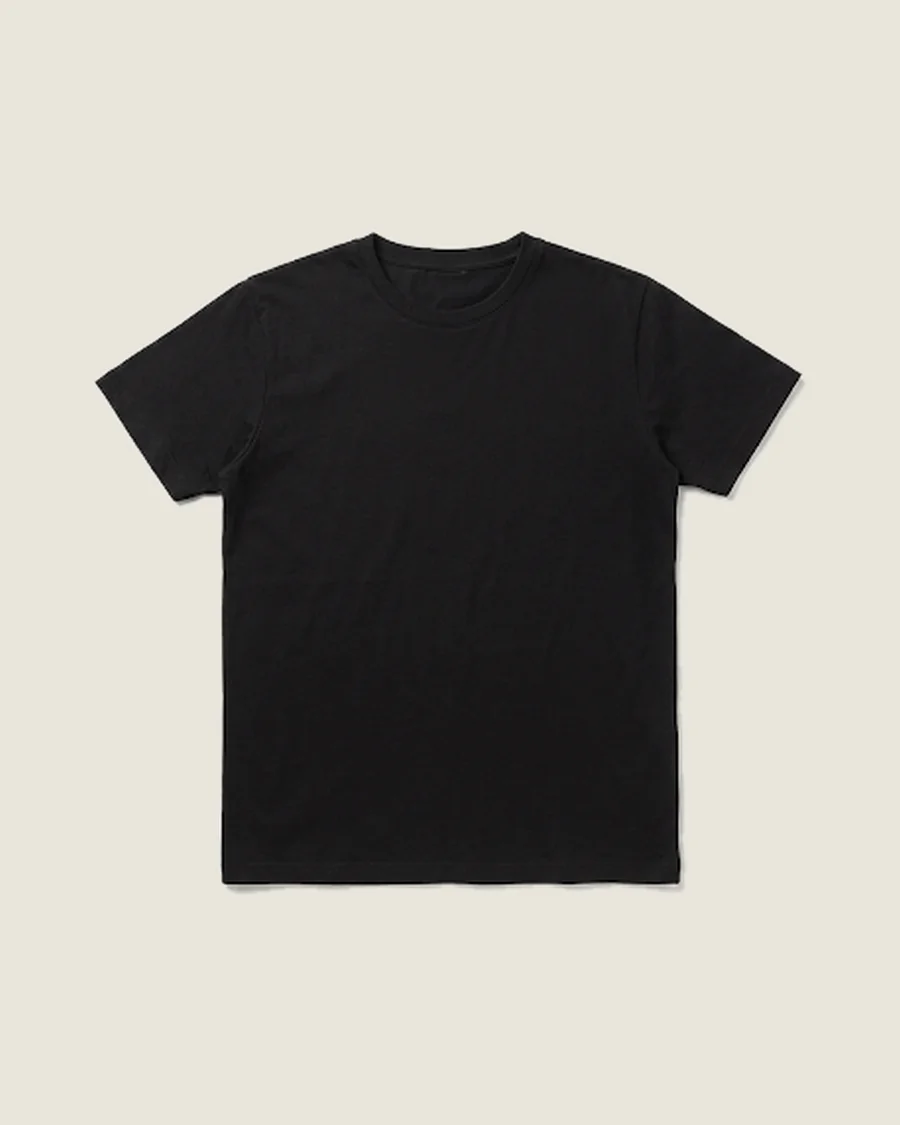
Pure cotton breathes well and softens with washing, which is why it's the default for everyday tees like the Classic Flat White.
Cotton-blends trade some of that breathability for structure - the poly content resists creasing and holds its shape through a wash cycle better than pure cotton does, which is part of why blends are common in fitted or performance-leaning styles.
Durability and Aftercare
This is more nuanced than it first appears. Polyester fibres resist stretching and shrinkage, so a blend garment holds its shape and size through repeated washing better than pure cotton does.
But pilling is a different story: blends - especially closer to 50/50 - can actually pill more than pure cotton, not less. Cotton fibres are weaker and break off cleanly during wear, so pills shed away; polyester fibres are stronger and don't break, so they anchor those broken cotton fragments into visible pills that stay put. Cotton-heavy blends (80/20 or higher) avoid most of this, which is why blend ratio matters more than a simple cotton-vs-blend call when durability is the deciding factor.
Pure cotton needs a bit more care - cold washes and avoiding high heat in the dryer go a long way - but rewards that care with a broken-in softness blends don't really replicate.
Decoration Performance
Fibre composition affects decoration as well as feel. Screen printing bonds most reliably to natural fibres, so pure cotton generally holds ink better over time than a heavily blended fabric - our Screen Printing vs Embroidery guide covers this in more depth.
Embroidery is less fussy about fibre content since the thread sits on top of the fabric rather than bonding with it, so blends perform well under a needle. If weight is also a factor in your decision, our GSM Fabric Weight Guide covers how weight and fibre content interact.
How to Choose
If a garment needs to look and feel classic - soft, breathable, ages well with a bit of care - pure cotton is the safer choice, and it's also the more reliable print surface for screen printing.
If a garment needs to hold its shape under harder wear with less careful laundering - activewear, uniforms washed constantly, moisture-wicking performance pieces - a cotton-blend, like our Performance Singlet, is worth the trade-off.
As a rule of thumb: reach for pure cotton for everyday tees and merch where feel matters most, and reach for a blend when the garment needs to survive tougher conditions than a normal wash-and-wear cycle.